What We Took Away from FOOTPRINT+ 2026
FOOTPRINT+ 2026 brought together leaders from across the built environment to discuss the practical challenges, innovations and collaborations shaping the future of sustainable development.
Across the event, one message came through consistently: the industry is moving beyond aspiration and into implementation. Conversations are becoming less about whether change is needed, and more about how it can be delivered at scale.
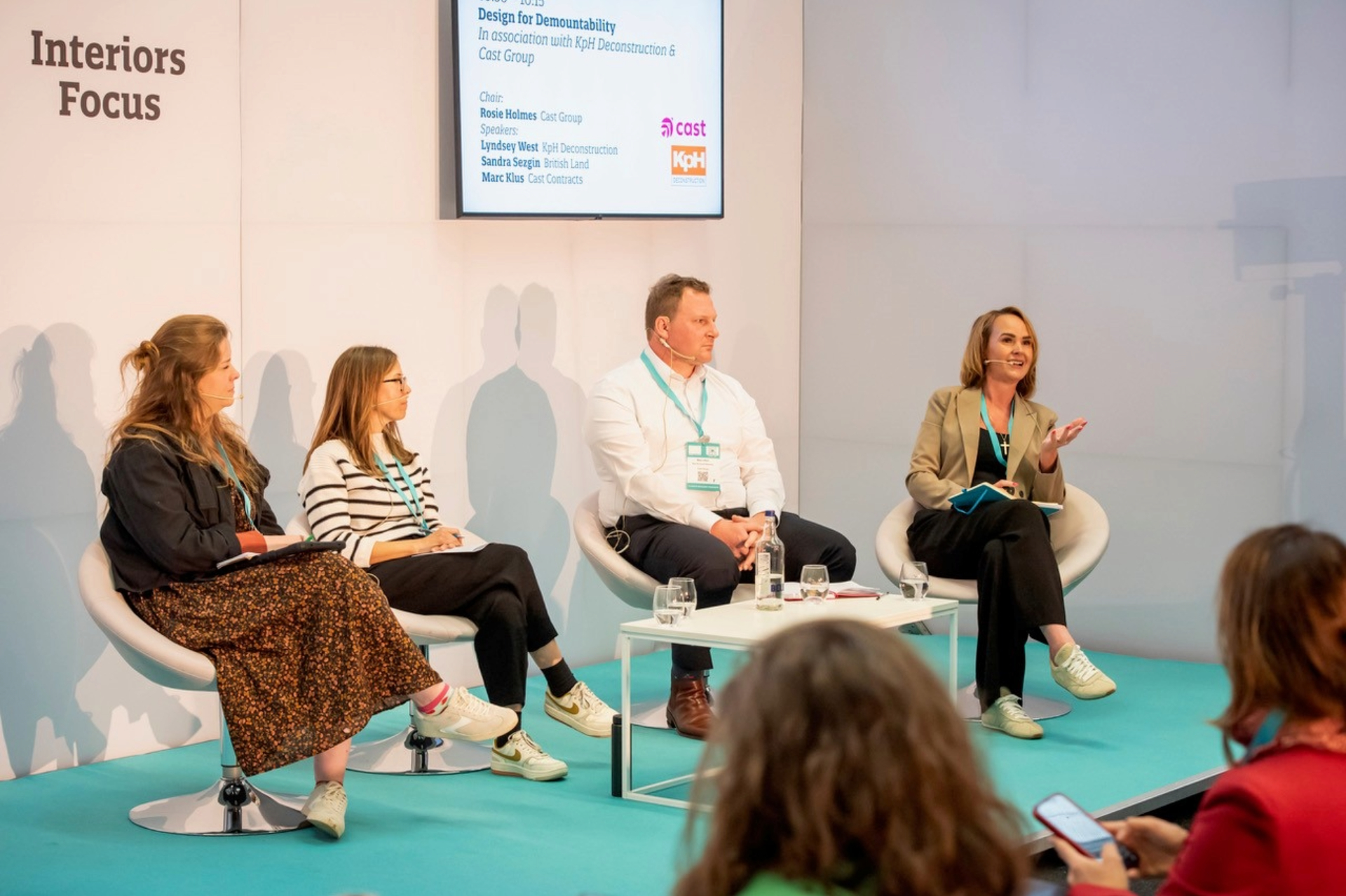
Several sessions particularly stood out to the KpH team, highlighting the growing importance of supply chain collaboration, material reuse and the increasing commercial pressures driving environmental performance across the sector.
Supply chain collaboration will be critical to achieving Scope 3 goals
During the “Ensuring Supply Chain Solidity” panel, chaired by Martyn Wright of TECHNAL, discussions explored how major organisations can strengthen supply chain collaboration as they move into the next phase of reducing Scope 3 emissions.
David Entwistle of Saint-Gobain discussed the impact of the Glass Forever scheme and the role post-consumer recovery solutions can play in reducing virgin raw material consumption at scale.
The conversation reinforced the importance of manufacturer collaboration and creating practical recovery pathways that allow materials to remain within a circular system rather than becoming waste.
For KpH, this closely reflects the direction the industry must continue moving towards, earlier engagement, stronger partnerships and scalable recovery solutions that work operationally on live projects.
Investors and lenders are increasingly driving sustainability expectations
Another key discussion focused on governance, disclosure and accountability within the investment and lending landscape.
The session highlighted how environmental performance is no longer viewed as a secondary consideration, but an increasing factor in investment decisions and asset viability.
There was significant discussion around changing occupier expectations, with tenants increasingly wanting to understand not only how buildings operate, but also how they are refurbished and redeveloped.
One notable point raised was that lenders are becoming less willing to support inefficient buildings unless there is a credible and measurable strategy for improvement.
The conversation demonstrated how sustainability performance is becoming intrinsically linked with commercial resilience and long-term asset value.
Reuse at scale is becoming commercially viable
The “(Re)Euston Tower: Towards Concrete Reuse at Scale” panel explored innovative approaches being adopted to reduce embodied carbon through structural concrete reuse.
British Land and John F Hunt discussed the PRECs approach — Piecemeal Reclamation of Existing Concrete Slabs — which focuses on carefully removing and recovering larger sections of structural concrete for reuse, rather than following the more traditional process of crushing materials into aggregate.
The process involves cutting floor slabs into larger sections before transporting them to holding areas where they can be processed further, helping remove additional cutting activities from the project critical path.
One of the more interesting points raised was that programme timelines were reportedly not impacted by the revised approach. Although the methodology introduced additional cost, the panel suggested this was far less significant than first anticipated, particularly when balanced against the wider carbon benefits and growing client focus on environmental impact.
Moving from conversation to action
A recurring theme throughout FOOTPRINT+ 2026 was the recognition that circularity, reuse and embodied carbon reduction cannot be solved by one organisation alone.
Progress depends on collaboration across developers, contractors, manufacturers, investors and supply chains, alongside a willingness to challenge traditional delivery models and explore new approaches.
For KpH, the event reinforced the importance of continuing to support practical, scalable solutions that help move circular economy principles further into mainstream project delivery.
Lyndsey West said
One of the most encouraging things about FOOTPRINT+ was hearing honest conversations around both the challenges and opportunities facing the industry.
Driving circularity at scale requires collaboration, earlier engagement and a willingness to challenge traditional ways of working.
What was clear across the event is that momentum is building, and more organisations are actively looking at how these ideas move from aspiration into practical delivery.